It is one of the first questions we get from Melbourne homeowners buying an electric vehicle. They have budgeted for the car and the charger, then someone mentions a switchboard upgrade and the cost suddenly looks a lot bigger.
The good news is that many homes do not need one. At Melbourne Wiring Services, we check the switchboard as part of every EV charger quote, and plenty of homes across Pascoe Vale, Essendon, Strathmore and the inner north have the capacity to take a charger as they are. Whether yours does comes down to a few clear factors.
The Short Answer
Yes, you can often install a home EV charger without upgrading your switchboard. You can usually skip the upgrade if your board:
Uses modern circuit breakers, not ceramic fuses
Has safety switches (RCDs) protecting its circuits
Has spare space for a new dedicated circuit
Is in good condition, with no heat damage or asbestos backing
Sits on a supply that can handle the extra load
If any of those are missing, an upgrade or another solution may be needed before the charger goes in.
Why the Switchboard Matters for EV Charging
A home EV charger is not like other appliances. A typical 7kW charger on single-phase power draws around 32 amps, and it can do that continuously for hours while the car charges overnight.
That is a big, sustained load. It needs:
Its own dedicated circuit, with a breaker sized to suit the charger.
Safety switch protection of the type the charger requires.
Enough spare capacity in your supply that the charger, air con, oven and hot water can run without overloading the main supply.
Your switchboard is where all of this comes together, so it is the first thing an electrician looks at.
Signs Your Switchboard Can Handle a Charger
Homes built or renovated more recently usually have boards in good shape. Things we like to see when we open the cover:
A row of modern circuit breakers
At least one or two safety switches
Empty spaces on the DIN rail for new devices
Clear labelling and no signs of overheating
A board that has not been extended with makeshift additions over the years
If your board looks like this, a dedicated EV circuit can usually be added without replacing the whole board.
When a Switchboard Upgrade Is Usually Needed
Older Melbourne homes, particularly those with original or partly updated electrics, often run into one of these issues:
Ceramic fuses. These boards were not designed for modern loads and generally need replacing.
No safety switches. An EV charging circuit needs RCD protection, and boards without RCDs are typically outdated anyway.
No spare space. If there is nowhere to fit a new breaker and safety switch, the board may need to be replaced or extended.
Asbestos backing. Older boards with asbestos panels need to be handled properly and are often replaced as part of the job.
Signs of heat damage. Scorch marks, a burning smell or a buzzing sound need attention before any new load is added.
In these cases, a switchboard upgrade makes the home safer for everyday use as well as for EV charging, so it is rarely money spent on the charger alone.
Options That Can Help You Avoid an Upgrade
Even where capacity is tight, a full upgrade is not always the only answer.
Set a Lower Charging Rate
Most smart chargers can be set to draw less current. Charging more slowly overnight still fills most daily driving needs, and it reduces the load on your supply.
Load Management
Some chargers can monitor the total load on your home and automatically slow down when other big appliances are running. When the oven or air con switches off, charging speeds back up. This lets the charger use spare capacity without overloading the supply.
Off-Peak and Solar-Aware Charging
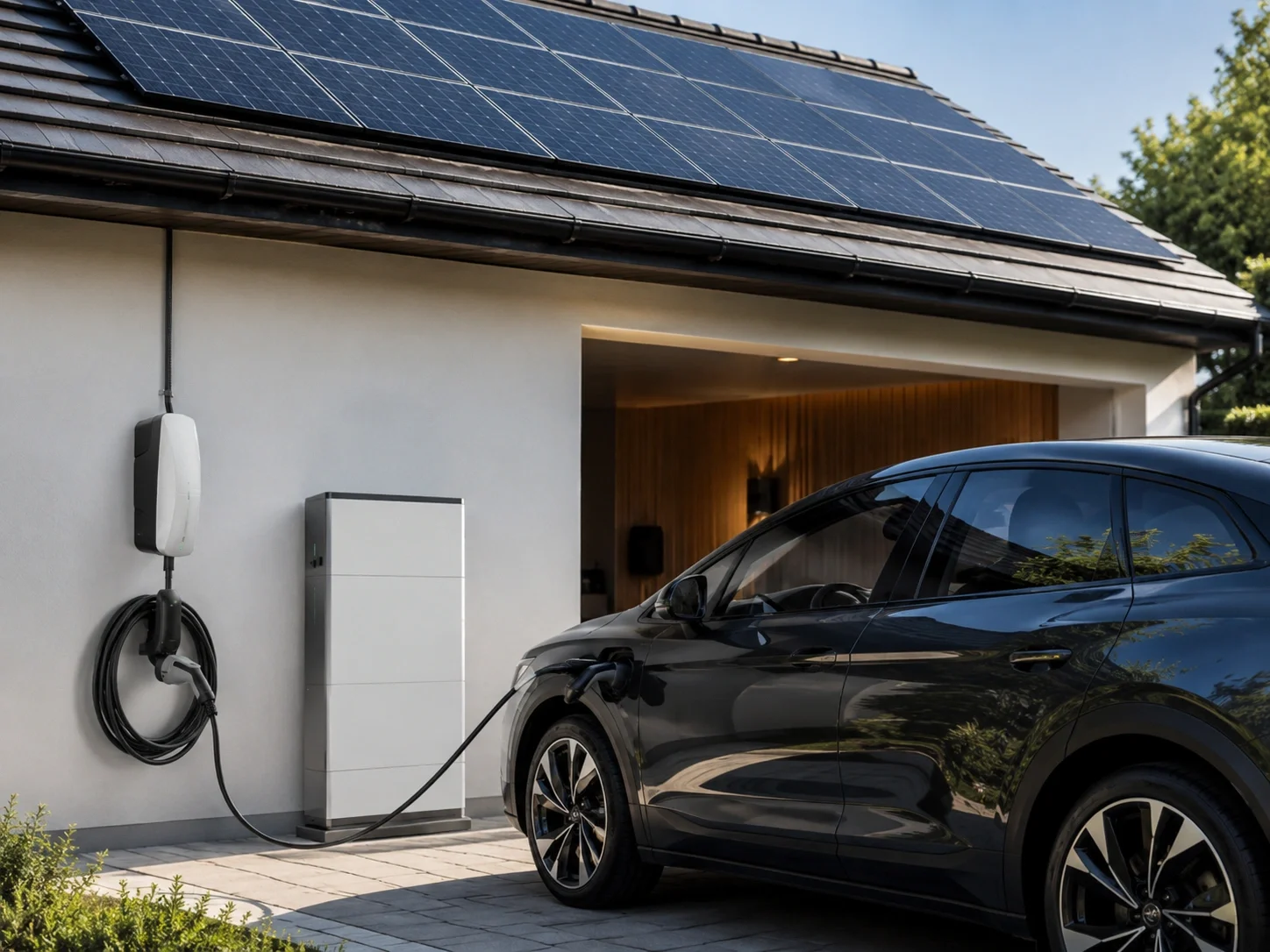
Scheduling charging for overnight off-peak hours keeps it away from your home's busiest times. If you have solar, a solar-aware charger such as Evnex can send surplus solar to the car first. As an accredited Evnex installation partner, we set this up as part of the install.
A Sub-Board for Detached Garages
If your car is parked in a detached garage or carport, a sub-board closer to the charger can be a neater solution than running everything back to the main board.

What About Single-Phase vs Three-Phase?
Most Melbourne homes run on single-phase power, which comfortably supports a 7kW charger. Three-phase supply allows faster charging, up to 22kW, but most EVs cap AC charging at 7 to 11kW anyway. Upgrading to three-phase is rarely worth it just for the charger unless your car and your driving needs make use of the extra speed.
How We Assess Your Home
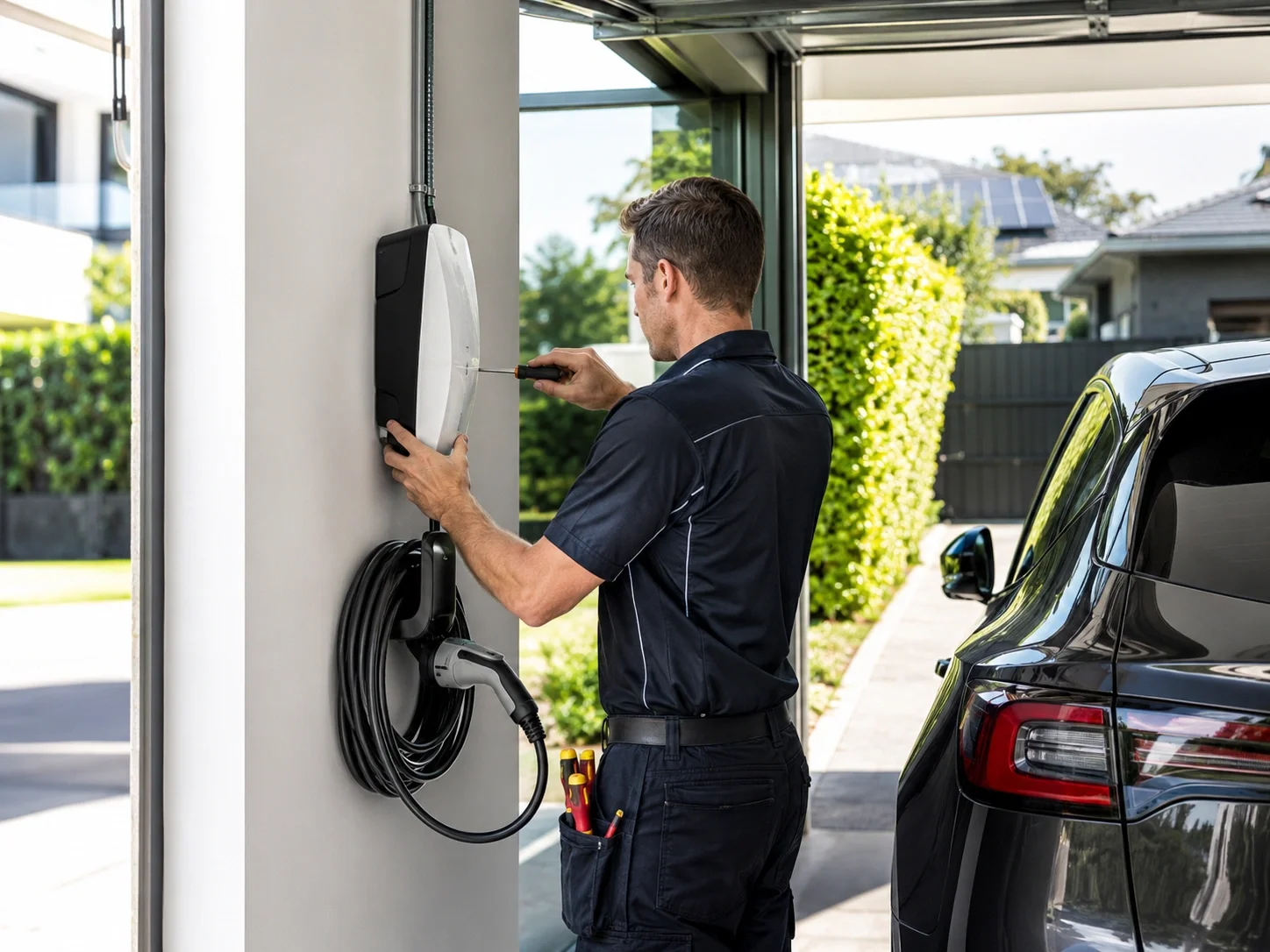
Every home EV charger installation quote from Melbourne Wiring Services includes a free check of your switchboard's spare capacity, safety switch protection and the cable route to your parking spot. We can often start from photos before visiting.
If an upgrade is needed, it is itemised in your written quote so there are no surprises. Where the local distributor, such as Jemena or CitiPower, needs to be notified, we handle that too. Installation usually takes two to four hours, and every job is tested to Australian standards with a Certificate of Electrical Safety issued at completion.
EV charger installation in Victoria must be carried out by a licensed electrician. We hold a Registered Electrical Contractor licence (REC 26076) and A Grade Electrician licences.
Find Out What Your Home Needs
The only way to know for sure whether your switchboard can handle a home EV charger is to have it checked. If you are buying an EV or already have one waiting in the driveway, contact Melbourne Wiring Services for a free, obligation-free quote. We will check your board and recommend the simplest setup that suits your home and your car.