Surge Protection for Homes in Tweed Heads: Do You Really Need It?
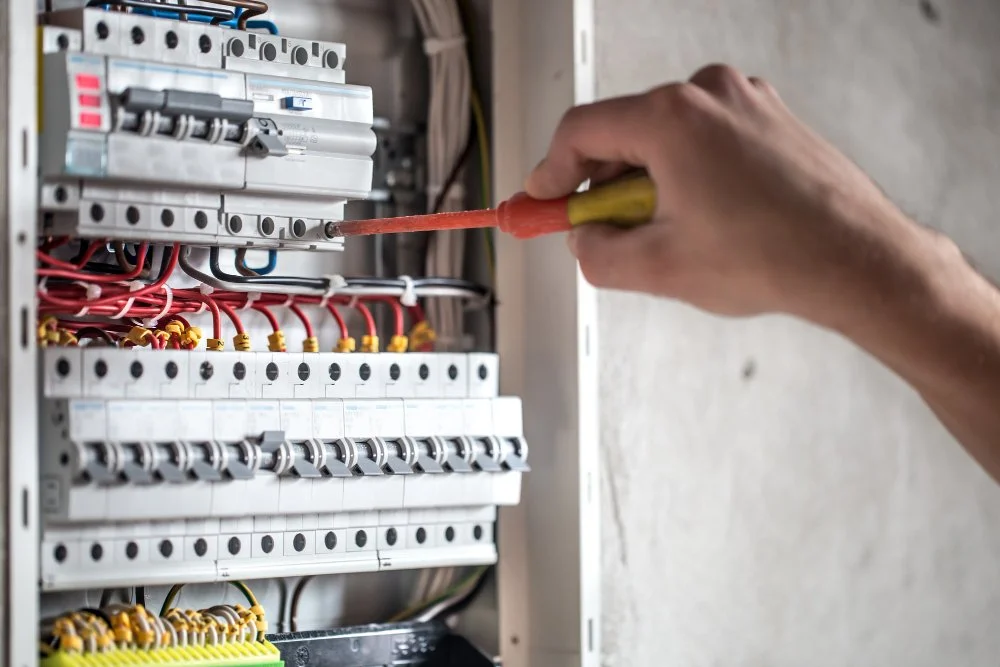
When storm clouds roll across the Northern Rivers, most Tweed Heads homeowners rush to bring in the washing or close the windows. But what about the thousands of dollars worth of electronics humming quietly inside your walls? Your TV, fridge, computer, air conditioner, and even your solar system are all at risk from electrical surges, and most people don't realise how common these voltage spikes actually are.
So, do you really need surge protection for your home in Tweed Heads? The short answer is yes, and here's why it matters more than you might think.
As licensed electricians working daily in Tweed Heads and across the Northern Rivers, we regularly see surge-related damage after summer storms and grid outages. From fried TV boards to failed solar inverters, many of these costly issues could have been prevented with the right surge protection in place. This hands-on experience gives us a clear picture of the real risks local homeowners face, not just the theory behind power surges.
What Is a Power Surge and Why Should You Care?
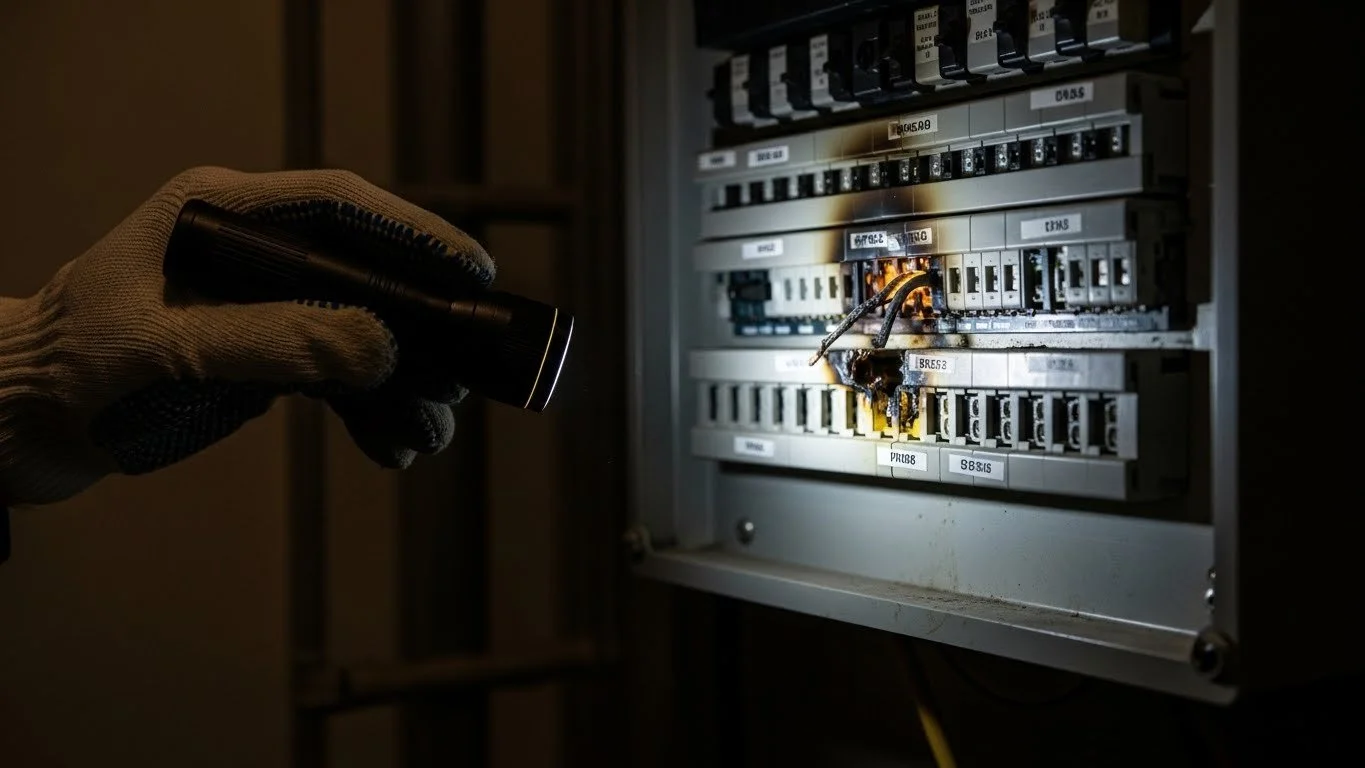
A power surge is a sudden spike in electrical voltage that flows through your home's wiring. These spikes can happen in microseconds and often go completely unnoticed, but they're quietly damaging your electronics with every occurrence.
Think of your home's electrical system like water flowing through pipes. When there's a sudden increase in pressure, things can burst. The same thing happens with electricity. When voltage jumps above the normal 230 volts, that excess energy needs somewhere to go, and unfortunately, it often goes straight into your appliances and electronics.
What Causes Power Surges in Tweed Heads?
Our coastal location makes Tweed Heads particularly vulnerable to several surge triggers:
Lightning strikes are the most dramatic culprit. A single lightning hit on a nearby power line can send millions of volts racing through the network. You don't need a direct strike on your home for damage to occur.
Grid switching and transformer issues happen when the power company restores electricity after an outage or performs maintenance. These grid fluctuations create voltage spikes that travel straight into homes.
Internal electrical issues like faulty wiring, overloaded circuits, or even switching on high-power appliances can create small surges within your own home. Over time, these micro-surges deteriorate your electronics.
Storm season fluctuations bring wind damage, downed power lines, and network disruptions that all contribute to unstable voltage delivery throughout the area.

The Real Cost of Not Having Surge Protection
Without proper electrical surge safety, you're gambling with thousands of dollars worth of equipment. Modern homes rely heavily on sensitive electronics that simply can't withstand voltage spikes. Your smart TV, computer, gaming consoles, security systems, and kitchen appliances all contain delicate circuit boards that fry instantly when hit by excess voltage.
Even if damage isn't immediately visible, repeated small surges shorten the lifespan of your devices. That expensive fridge that should last 15 years might only make it to 8. Your air conditioner's circuit board might fail prematurely. Insurance doesn't always cover surge damage, and when it does, the claims process is lengthy and stressful.
Whole House Surge Protection vs Power Boards
Many Tweed Heads residents rely on those $20 power boards with built-in surge protection. While these help with whatever you plug into them, they're limited. They also wear out quickly without any warning indicators, leaving you unprotected without realising it.
Whole house surge protection for homes in NSW works differently. Installed at your switchboard by licensed electricians like our team at Blue Ridge Electrical, these systems protect every circuit in your home at once. They act as a frontline defence, catching major voltage spikes before they reach your outlets and appliances.
The real advantage? Your hardwired appliances like air conditioners, hot water systems, dishwashers, and wired security cameras all get protected automatically. If you've invested in solar panels or an EV charger, this protection becomes even more necessary since these systems contain expensive, voltage-sensitive components.

How Power Surge Protection Systems Actually Work
Professional surge protection devices detect excess voltage instantly and divert it safely to the earth through your home's grounding system. This redirection happens in milliseconds, stopping dangerous current from reaching your household circuits.
Quality systems provide multi-stage protection. The first stage at your switchboard handles major surges from external sources like lightning or grid issues. Secondary protection at individual outlets provides another layer of defence against smaller, internal surges.
In Australia, professionally installed surge protection devices must comply with AS/NZS 3000 (the Wiring Rules) and AS/NZS 1768 for lightning protection. A licensed electrician ensures the device is correctly rated, properly earthed, and compatible with your existing switchboard, which is critical for effective protection and insurance compliance.
The key is proper installation. Surge protection only works as well as your switchboard's condition and earthing system. This is why DIY solutions simply don't cut it. Licensed electricians ensure your protection meets Australian electrical safety standards and is correctly rated for your home's specific electrical load.
Is Surge Protection Worth the Investment?
When you weigh the cost of professional surge protection installation against the potential expense of replacing damaged electronics, the answer becomes clear. A whole house surge protector typically costs between $350 and $800 installed, depending on your home's requirements.
Compare that to replacing a TV ($1,500), computer ($2,000), air conditioner circuit board ($800), or solar inverter ($3,000). One prevented surge incident pays for the entire system, and quality surge protectors last for years with minimal maintenance.
These prices typically include a site inspection, supply of a compliant surge protection device, professional installation, and testing of your earthing system. Reputable electricians will provide upfront pricing and explain exactly what level of protection your home needs, so you’re not paying for unnecessary upgrades or under-protecting valuable equipment.
For Tweed Heads homeowners, especially those in storm-prone areas near the coast, surge protection isn't just a nice-to-have anymore. It's essential infrastructure that protects your investment and gives you genuine peace of mind during storm season.
Take Action Before the Next Storm
Don't wait until after a lightning strike to think about surge protection. At Blue Ridge Electrical, we're your local family-owned team serving Tweed Heads and the Northern Rivers with honest, reliable electrical services.
We assess your home's specific needs, recommend the right level of protection, and install compliant systems that actually work when you need them most. Our licensed electricians ensure everything is correctly earthed, properly rated, and ready to defend your home 24/7.
If your home is more than 10 years old, has solar panels, an EV charger, or experiences frequent power interruptions, a switchboard inspection is especially important. Even newer homes may lack adequate surge protection, as it was not always a standard inclusion. A professional assessment confirms whether your current setup meets today’s safety expectations and local conditions.
Ready to protect your home? Contact Blue Ridge Electrical today for a professional electrical safety assessment. Call us or visit our website to book your switchboard inspection. We're available for emergency callouts and offer upfront, fixed pricing with no hidden surprises.
Your appliances, your budget, and your peace of mind are all worth protecting.
Comments
Relevant sections have been changed and highlighted for EEAT and HCU optimisation. The grammar and KD are already on point.